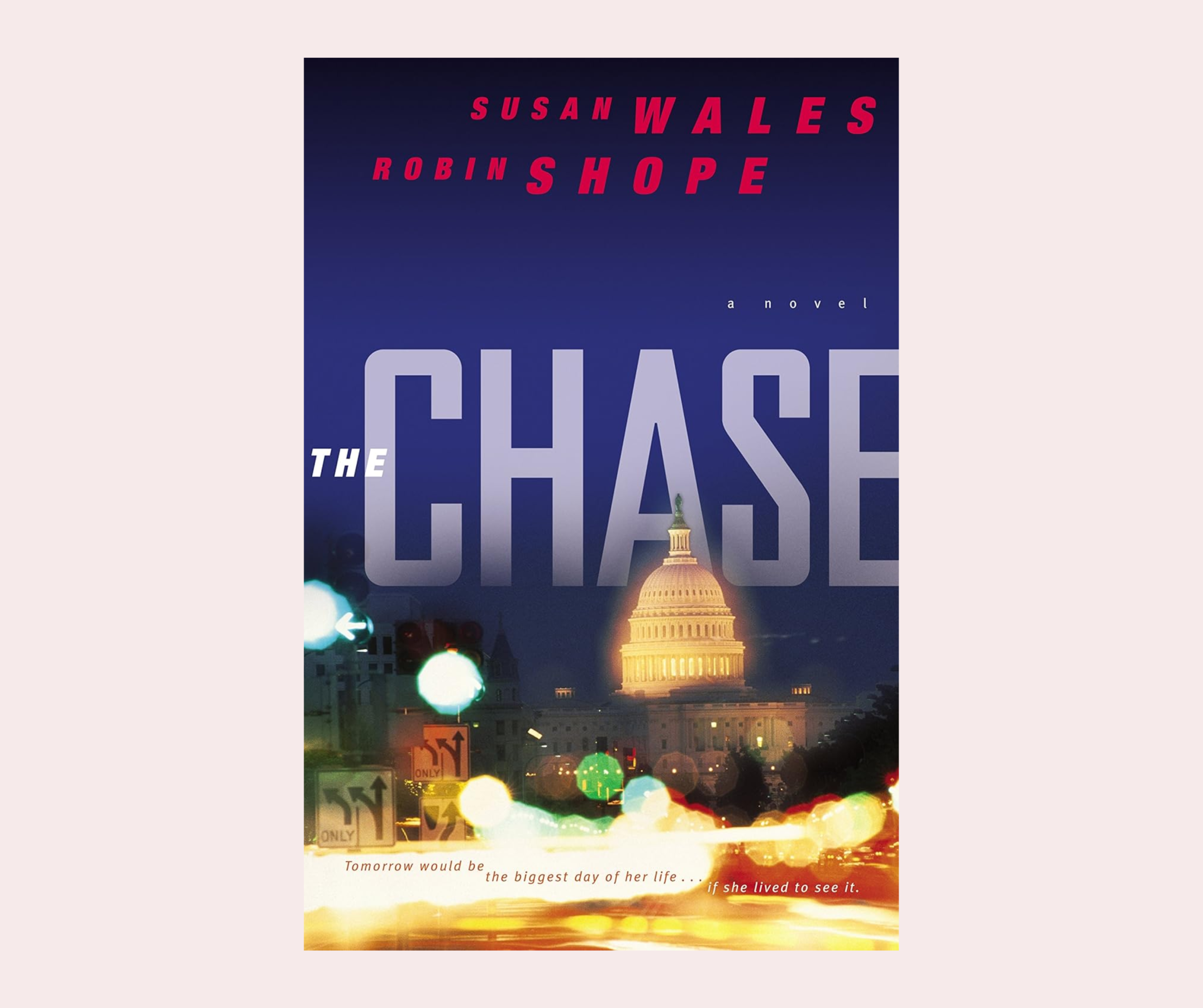
There is an element of being a writer and a Christian that makes Washington D.C. seem like a very scary place. Any time that a city holds that many secrets that powerful people do not want to see out in the public realm, there is an innate sense of trepidation and metaphorical back-reeling about a reporter exposing any big secrets, particularly those actions of politicians that break the very laws those same politicians are legislating.
If we read the back-cover synopsis of The Chase before starting Chapter 1, this is the mindset that we adopt along with the very first, foreboding paragraph. If we don’t read the back cover first, we readers first find chaos on the first page, then the reporter-in-D.C. background on the second page.
Regardless of our preferences for how to begin reading a novel, The Chase by Susan Wales & Robin Shope is a suspense-filled good read. I very much enjoyed the plot and felt a kinship with the characters. And, I very much appreciate the lack of extreme gore and extreme violence toward women that may be found in more secular versions of similar plot-lines.
Two things that I would like to have seen enhanced are: 1.) the action of the action scenes, and 2.) the development of personal epiphanies. Let me explain. When I read a novel, my best reader experiences come from those narratives that lead me from one street corner to the next, or from one personal realization to the next. For example, if someone is being chased by a car, I love to know that the rear car drove into the bumper of the front car while they were on the freeway, but I would also like to know what emotions the driver seemed to be portraying. Were there other cars around? What did the scenery look like? Were there exits nearby to leave the freeway? If a plot is set in a specific town, please make the action scenes specific to that town. I’m not saying that’s how The Chase plays out exactly, I’m just saying that although “the setting” part of a narrative isn’t necessarily my favorite, there are plot times when more setting is a good option. [For an excellent example of action scenes in literature, read Dee Henderson’s Uncommon Heroes Series.]
Along these same lines, I like to see personal epiphanies played out in fictional narratives. If someone suddenly decides that they want to read their Bible for the first time, I want to know why. I might infer that the character’s endangerment and difficult home life might have impacted the decision, but I want some insight into that characters internal dialogue along the way. It feels more real for a character to ponder ideas before making a snap decision. Likewise, a narrative that includes little insights into how a romantic couple is starting to feel closer to each other is always a plus. For example, if the man calls the woman to see if she’s alright, and then the narrative says shortly after that the woman is thinking that the man might be dependable, I will think she’s beginning to hold him in a bit higher regard than before.
Overall, I love the plot of The Chase. Sometimes I was able to tell what was coming, but that is often okay when an author does a good job of telling the story while throwing in some plot twists to fill in the “meantime.” Honestly, I was sad to read the end of the book. I would have loved to read an in-depth description of the cabin, the cars, the clothing, the hairstyles. In high-action plots, these scene-setting times do well to lower the anxiety so that the reader is allowed a drastic increase in trepidation when the action returns. It seems to me like a perfect scenario for a sequel.
Just two Bible verses to keep in mind: “Take no part in the unfruitful works of darkness, but instead expose them. For it is shameful even to speak of the things that they do in secret” (Ephesians 5:11-12).
Rating: worth reading – think about the implications
Click here to find it on Amazon.com:

See more reading suggestions at: Judge the Cover Recommendations (on Amazon.com)